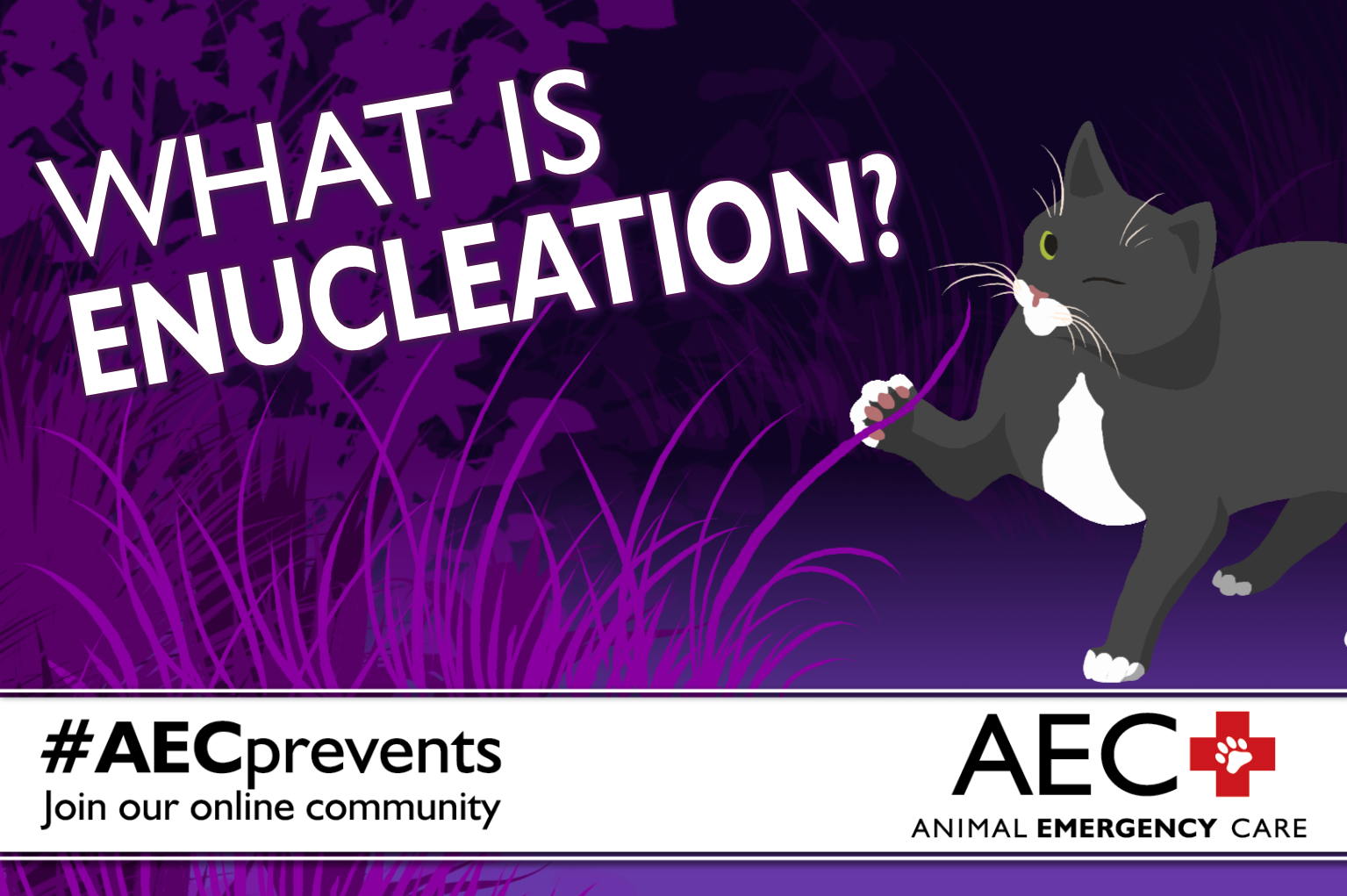
The eyes of our companion animals are fragile, just like our own. Most pet owners can easily imagine how eye pain may reduce quality of life for their dog or cat. The goals in treating eye damage start with preserving vision, and failing that, to prevent pain or further damage. Enucleation is a common and well-understood but irreversible surgical option for protecting a pet’s comfort when vision is no longer possible. The team at Animal Emergency Care wants you to know that pets can live active, joyful lives even with a permanent wink.
What is enucleation?
Veterinary enucleation is the surgical removal of an animal’s eye. If vision cannot be preserved, and the damaged organ will cause further risk to the patient, this removal can be the best medical choice to protect a pet’s health.
A dog’s or cat’s eyeball (globe) is held in the socket (orbit) by several muscles. The globe is connected to the brain via the optic nerve. During the procedures, the patient undergoes general anesthesia. In most enucleation surgeries, the surgeon will remove the globe, tear-producing structures, and the eyelids. The surgeon then severs the optic nerve, muscles, and the blood vessels that serve them.
In some cases, the globe may be preserved for aesthetic (appearance-based) purposes, but this requires the intervention of an ophthalmology specialist.
Are there alternatives to enucleation?
A board-certified ophthalmologist can perform specialized procedures that address some of the same conditions that can be solved with enucleation. In emergent situations, delaying care and seeking a specialist is not always an option.
Some pet owners are distressed by the idea of their pet missing an eye in a way that alters their visual appearance. If it is not possible to preserve vision, sometimes it is still possible to salvage eye structures. A specialist with the appropriate equipment and skills may be able to replace the contents of the globe with a prosthesis (called a black ball). They may also be equipped to perform advanced procedures to address ocular wounds or glaucoma. A partially damaged but preserved eye may require ongoing care from the owner, such as the application of lubricating eye drops, for the lifetime of the pet.
Relevant medical conditions and symptoms
Your pet should see a veterinarian as soon as possible if you observe:
- An eye protruding from socket (proptosis)
- A foreign object embedded in the eye
- Blood in the eye or bleeding from the eye
- Pawing/rubbing at the eye
Trauma (sudden physical damage) to the eye is often responsible in cases where enucleation is deemed the safest and most comfortable medical action. Common traumatic eye injuries can be caused by:
- Running through thick vegetation
- Altercations with other pets or wild animals
- Projectiles or fireworks being used near the pet
- Car accidents
- Unsupervised rowdy play, as with younger high-energy pets, resulting in accidental injury
Non-traumatic damage that can lead to enucleation can include but is not limited to:
- Herpes-related ulcers in cats
- Ocular cancer
- Some cases of glaucoma
- Treatment-resistant infection
When is enucleation a recommended treatment?
Enucleation is nearly always effected to alleviate or prevent pain. A dog or cat can live an active, happy life without vision in both eyes, but sometimes damage to the eye structures causes discomfort. In those cases, the structures should be removed.
In cats, enucleation can also be recommended as cancer prevention. When the feline eye has lost vision it may develop a malignant tumor called a post-traumatic sarcoma.
Many people significantly underestimate their pet’s adaptability to vision changes. Both dogs and cats have several other powerful senses, like smell and hearing, to assist them in navigating their daily life. Your veterinary care team can provide you with educational resources to help you and your pet have the smoothest possible transition after partial or total vision loss.
How to pay for veterinary care like enucleation
Enucleation is less expensive than many other veterinary surgeries. However, because it is frequently related to eye trauma, it is less likely to be a planned expense. A pet health insurance plan may cover surgery and recovery costs, leaving you free to worry about your pet’s comfort instead of your finances. Pet insurance provider Trupanion pays partnered veterinary clinics directly, which also eliminates the need to pay up front, submit paperwork, and then wait for reimbursement.
If your pet doesn’t have health insurance, there are other financial options to cover care at AEC, including but not limited to:
- Cherry
- All Pet Card
- CareCredit
- Scratch Pay
- Affirm
You can read about these in more detail on our payment options page.
Prevention
To help prevent the type of injury that necessitates enucleation, consider taking the following precautions for your pet:
- Do not let your pet roam at high speeds during times of low visibility or through thick vegetation.
- Monitor your pet around new pets, especially if one or both are cats, and encourage appropriate intensity of play.
- When traveling, use species-appropriate carrier or barrier to help protect your pet in the event of a collision.
- Don’t miss checkups, and be sure to make an appointment promptly if you notice anything abnormal related to your pet’s eye.
Call your family veterinarian right away if your pet has signs of eye trauma or eye pain. If you need help after hours, contact Animal Emergency Care and bring your pet in for treatment. #AECprevents
Sources
https://veterinarypartner.vin.com/default.aspx?pid=19239&id=4951449&sx=316892799&n=1
https://veterinarypartner.vin.com/default.aspx?pid=19239&id=6097123&sx=316892799&n=3
https://www.petmd.com/dog/procedure/enucleation-of-the-eye-in-dogs-and-cats https://www.merckvetmanual.com/emergency-medicine-and-critical-care/ophthalmic-emergencies-in-small-animals/corneal-lacerations-in-small-animals
https://pubmed.ncbi.nlm.nih.gov/30724460/